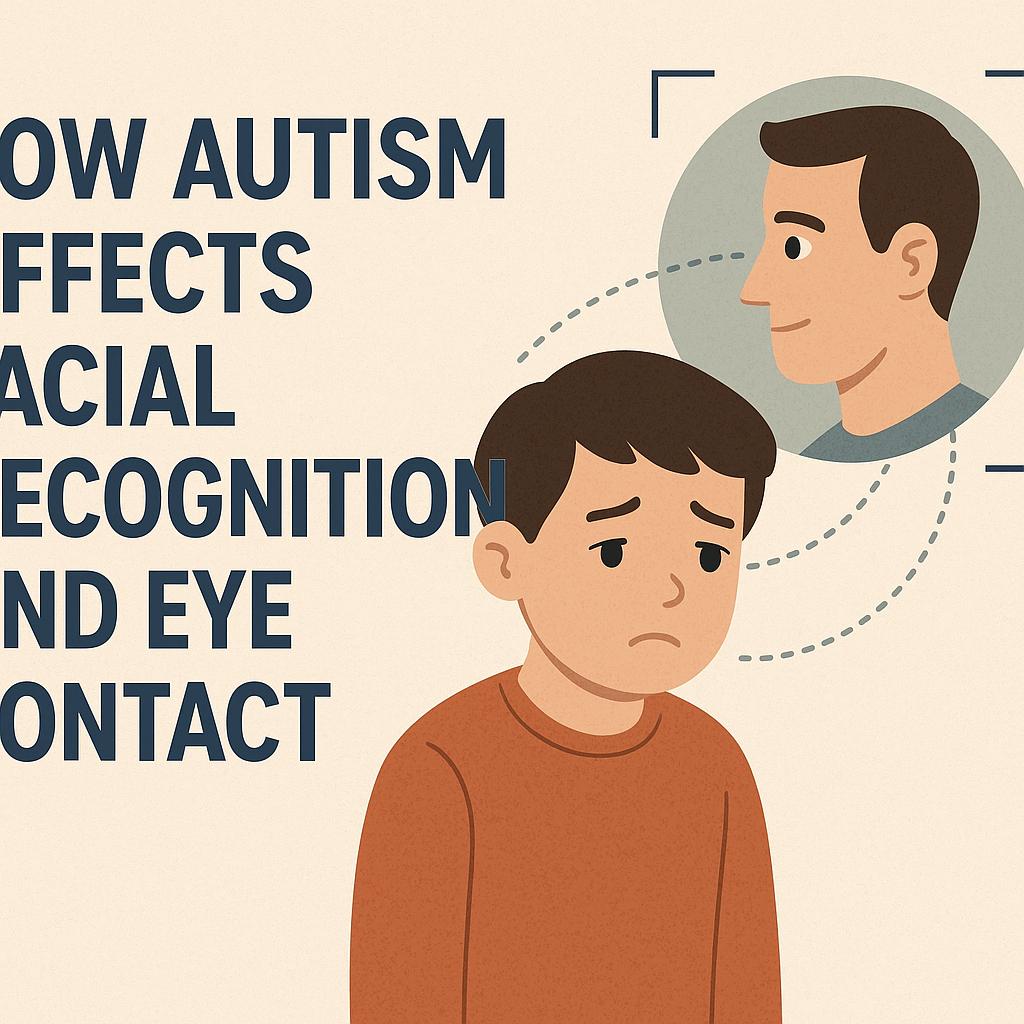
Understanding Autism and Facial Recognition
Autism spectrum disorder (ASD) is characterized by a range of developmental differences that affect individuals uniquely. One significant area where these differences manifest is facial recognition. People with autism often experience challenges in recognizing and interpreting facial expressions, which can significantly affect social interactions and communication. Gaining insight into the underlying mechanisms of this condition can lead to better support and understanding for individuals with autism.
Individuals with ASD can exhibit atypical neural processing related to facial recognition. Scientific research has explored how specific regions of the brain, particularly those involved in facial recognition such as the fusiform face area, might operate differently in people with autism. This altered functioning can result in a reduced capacity to perceive and interpret facial cues, which are vital for navigating social scenarios confidently and effectively.
The Role of Eye Contact in Social Settings
Eye contact plays a crucial role in human interaction, serving as a non-verbal form of communication that conveys attention and interest. However, for individuals on the autism spectrum, maintaining eye contact can pose significant challenges. Some individuals with autism might entirely avoid eye contact, while others could find it uncomfortable or anxiety-inducing. Such behavior is often misunderstood by neurotypical people as a sign of disinterest or lack of engagement, which is not necessarily the case.
Why Eye Contact Can Be Difficult for Individuals with Autism
Several factors contribute to the difficulty individuals with autism face when it comes to maintaining eye contact. Firstly, there is the sensory sensitivity common in autism, meaning that the sensory input from eye contact can be overwhelming and uncomfortable. Secondly, differences in neural processing related to gaze and facial recognition might contribute further to difficulties with eye contact. Neuroimaging studies have consistently indicated that the areas of the brain involved in face processing and eye gaze may exhibit reduced activity in individuals with autism. This diminished activity means that they might not derive the same information from eye contact as neurotypical individuals can.
Implications for Social Interaction
The challenges associated with facial recognition and eye contact in autism have important implications for social interaction. For instance, misinterpreting facial expressions paired with avoiding eye contact can lead to misunderstandings and make it more difficult for individuals with autism to engage socially. These challenges can interfere with forming relationships and communicating effectively due to the potential for frequent miscommunication.
A deeper understanding of these issues among educators, caregivers, and peers can promote improved communication and cultivate empathy. Useful strategies such as employing visual supports, utilizing social stories, and engaging in role-playing activities can aid individuals with autism in handling social interactions with greater ease and confidence. These techniques can also enhance their ability to understand social cues and respond appropriately, fostering a more inclusive environment.
Further Reading
For those interested in delving deeper into this topic, numerous research journals focus on neuroscience and psychology, offering considerable insights into how autism affects facial recognition and eye contact. Additionally, websites dedicated to autism research and support frequently provide useful resources and detailed information for families and educators seeking to enhance their understanding and support for individuals with autism. By exploring these materials, stakeholders can better appreciate the nuances of autism and the complex interplay between neural processing and social communication.